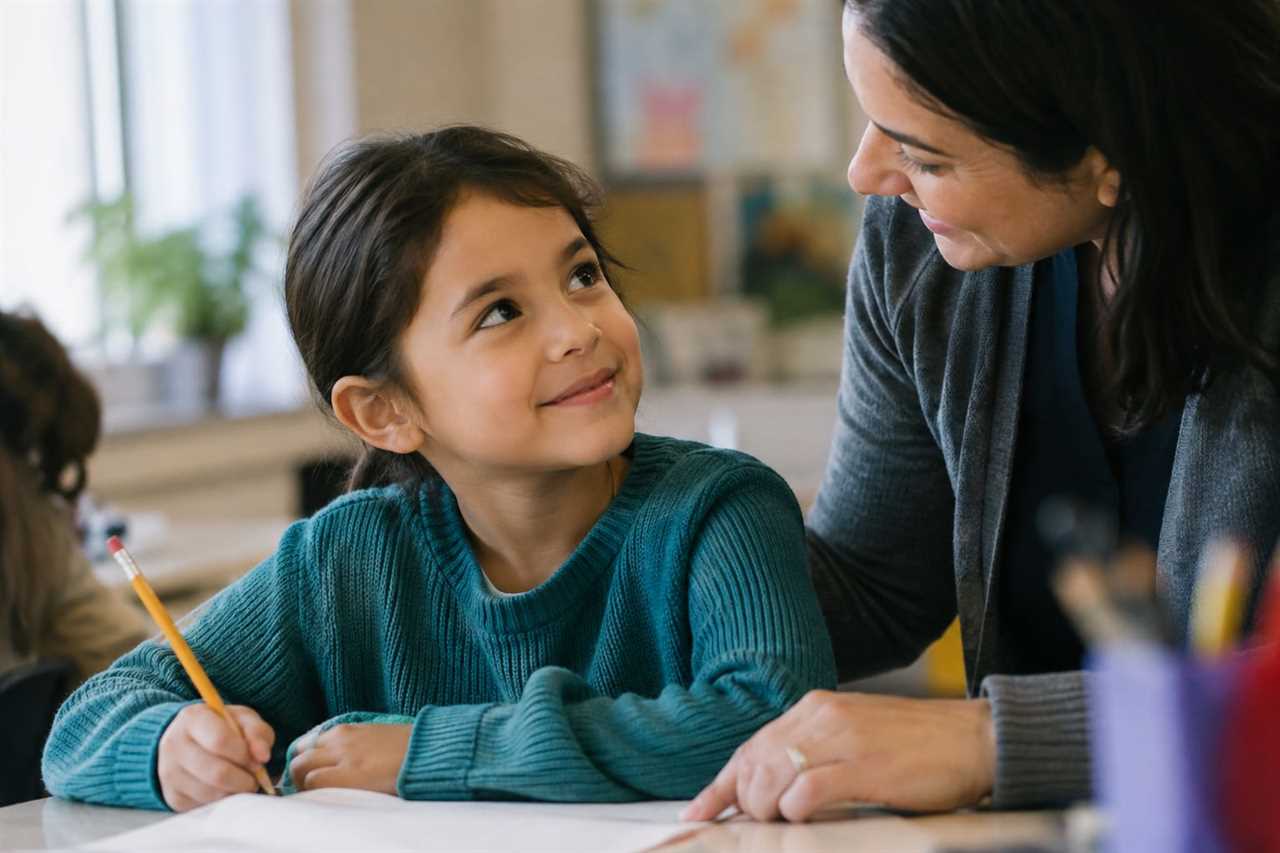
A teacher's words stick with kids long after class ends. A kind comment can push a child to keep trying. A harsh one said in front of friends can make a child doubt their own smarts. This matters right now because teachers give feedback every single day, and new research shows exactly how much that feedback shapes who kids become.
Quick Take
- Teacher feedback shapes how kids see themselves, not just how they score on tests.
- The Education Endowment Foundation (a group that studies what works in teaching) says feedback helps kids learn — but only when it's done right.
- OECD data from the PISA 2018 study (a big worldwide school survey) shows kids who feel supported by teachers are more motivated and less anxious.
- Harsh labels, public shaming, and constant comparisons can hurt a child's confidence long-term.
- Specific, honest, private, and progress-focused feedback builds kids up instead of tearing them down.
It's Not Just About Grades
Feedback does more than tell a kid if they got the answer right. It teaches them how to think about themselves as a learner.
When a teacher says, "You haven't got this step yet, let's try it again," the child learns the problem is fixable. When a teacher says, "You're always bad at math," the child starts to believe something is wrong with them, not just their answer.
"Poorly delivered feedback can have negative effects." — Education Endowment Foundation
That's the key warning here. Giving feedback isn't automatically good. How it's said matters just as much as how often.
Self-Esteem vs. Confidence: Two Different Things
Self-esteem is how a child feels about their overall worth. Confidence is how capable they feel at one specific task, like reading or math.
A kid can feel great reading out loud but shaky doing fractions. Teachers can't control a child's entire self-esteem. But their feedback is one big piece of the puzzle.
OECD research on PISA 2018 backs this up. Students who felt supported by teachers showed more motivation, more school engagement, and less anxiety. That doesn't prove feedback alone causes these things. But it shows teacher relationships carry real weight.
When Feedback Goes Wrong
Some comments do real damage. Things like "You're lazy," "Why can't you be like your sister?" or "Even the younger kids can do this" might be meant to motivate. Instead, they often just hurt.
Kids take these words as proof of what adults really think of them. A child called "dull" may stop raising their hand, even with a good answer in mind. A child always compared to the class star may feel like nothing they do is ever enough.
A child mocked for a wrong answer may stop asking questions altogether — and that fear blocks the very practice needed to improve.
Even constant praise can backfire if it's tied only to perfect scores. A child praised only for being "naturally smart" may panic when a task finally requires real effort, because struggling feels like it breaks their identity.
What Good Feedback Looks Like
Good feedback is specific. Instead of "You're brilliant," a teacher can say, "You explained your answer clearly and backed it up with evidence." That tells the child exactly what worked.
Good feedback also tracks progress, not just final scores. A child who jumps from getting two questions right to getting five right has improved — even if a classmate aced all ten.
Here's how the two approaches compare:
| Feedback Style | Example | Effect on Child |
|---|---|---|
| Judgment-based | "You're always bad at math." | Child doubts their ability |
| Identity-based praise | "You're just smart." | Child fears failing to look smart |
| Specific and task-based | "You checked your work and fixed your mistake." | Child learns what action helped |
| Progress-based | "You went from 2 right to 5 right." | Child sees learning as a process |
The EEF recommends feedback focus on the task and the learning process, not on personal judgments. Where feedback happens matters too — sensitive corrections work better said privately, not announced to the whole class.
Everyone Has a Role
Teachers don't need fancy speeches to build a child's confidence. Small, steady habits do the job: explaining mistakes without mocking, noticing real progress, and listening when a child is stuck.
Schools can help by training teachers on respectful feedback and banning public shaming. Parents can help too, by asking kids about what they learned instead of only asking about grades.
Why It Matters
Self-esteem comes from many places — family, friends, and life outside school. But teachers spend hours a day with kids, and their words carry weight. Feedback that is honest and kind, not harsh and shaming, helps kids bounce back from mistakes instead of fearing them.
Source: Edugist
Our last article on this: Leading with Character: The Power of Positive Thinking